STEM Pathway – Pure Sciences Track
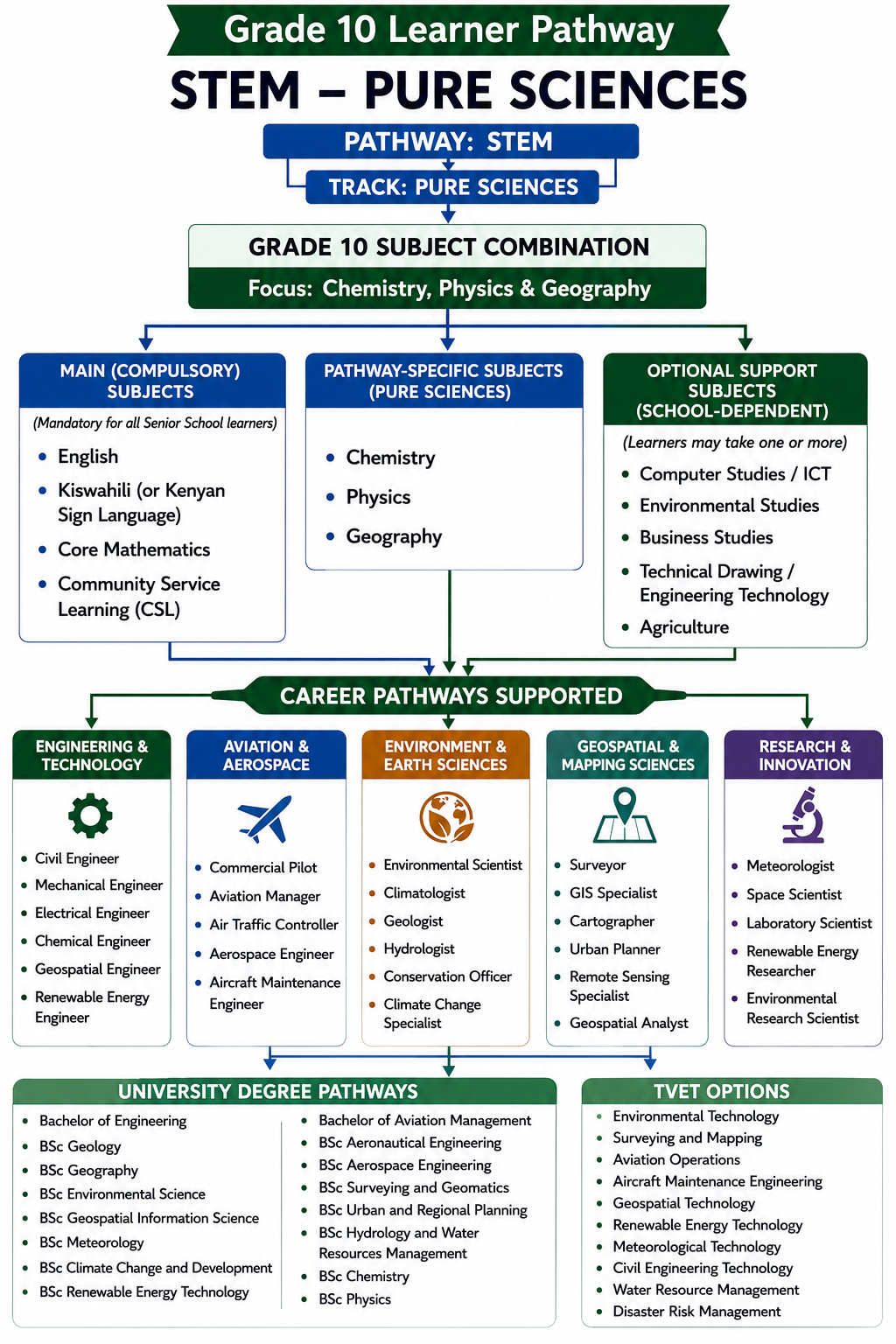
The Chemistry, Physics and Geography combination is an excellent choice for learners interested in environmental sciences, engineering, aviation, meteorology, geospatial technology, and earth sciences.
This combination combines scientific principles with an understanding of the Earth’s physical environment, making it ideal for learners who enjoy studying natural processes, technology, climate, and spatial sciences.
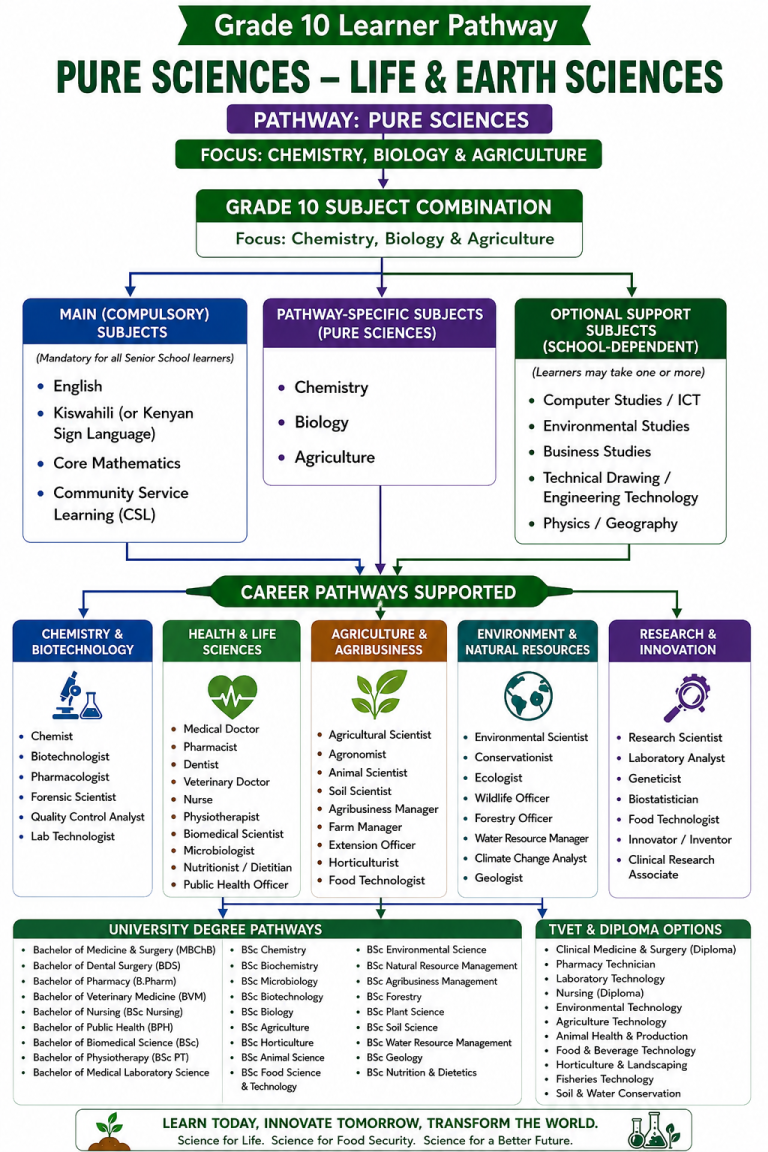
Subject Combination
Pathway-Specific Subjects
- Chemistry
- Physics
- Geography
Compulsory Subjects
- English
- Kiswahili/Kenyan Sign Language
- Core Mathematics
- Community Service Learning (CSL)
Optional Support Subjects (School Dependent)
- Computer Studies/ICT
- Environmental Studies
- Business Studies
- Technical Drawing/Engineering Technology
- Agriculture
Why Choose Chemistry, Physics and Geography?
This combination:
- Develops strong analytical and scientific skills.
- Builds understanding of environmental and physical processes.
- Supports careers in engineering, climate science, aviation, and geospatial technology.
- Equips learners with skills in mapping, environmental conservation, and earth sciences.
- Provides opportunities in emerging fields such as renewable energy and climate change management.
Who Should Choose This Combination?
This combination is suitable for learners who:
- Enjoy Physics and Geography.
- Are interested in weather, climate, maps, and environmental issues.
- Aspire to careers in engineering, aviation, environmental management, or geosciences.
- Enjoy fieldwork, research, and technological innovation.
Career Pathways Supported
Engineering and Technology
- Civil Engineer
- Mechanical Engineer
- Electrical Engineer
- Chemical Engineer
- Renewable Energy Engineer
- Geospatial Engineer
Aviation and Aerospace
- Commercial Pilot
- Aviation Manager
- Air Traffic Controller
- Aerospace Engineer
- Aircraft Maintenance Engineer
Environmental and Earth Sciences
- Environmental Scientist
- Climatologist
- Geologist
- Hydrologist
- Conservation Officer
- Climate Change Specialist
Geospatial and Mapping Sciences
- Surveyor
- GIS Specialist
- Cartographer
- Urban Planner
- Remote Sensing Specialist
- Geospatial Analyst
Research and Scientific Innovation
- Meteorologist
- Space Scientist
- Laboratory Scientist
- Renewable Energy Researcher
- Environmental Research Scientist
University Degree Programmes Supported
This combination can lead to courses such as:
- Bachelor of Engineering
- BSc Geology
- BSc Geography
- BSc Environmental Science
- BSc Geospatial Information Science
- BSc Meteorology
- BSc Climate Change and Development
- BSc Renewable Energy Technology
- Bachelor of Aviation Management
- BSc Aeronautical Engineering
- BSc Aerospace Engineering
- BSc Surveying and Geospatial Engineering
- BSc Urban and Regional Planning
- BSc Hydrology and Water Resources Management
- BSc Chemistry
- BSc Physics
TVET Opportunities
Learners may also pursue diploma and technical courses such as:
- Environmental Technology
- Surveying and Mapping
- Aviation Operations
- Aircraft Maintenance Engineering
- Geospatial Technology
- Renewable Energy Technology
- Water Resource Management
- Meteorological Technology
- Civil Engineering Technology
Advantages of This Combination
- Offers a wide range of career opportunities.
- Combines pure sciences with environmental studies.
- Supports both university and technical education pathways.
- Develops research, analytical, and technological skills.
- Prepares learners for careers addressing climate change and sustainable development.
Emerging Career Opportunities
The growing demand for environmental sustainability and technological advancement has increased opportunities in:
- Climate Change Management
- Geographic Information Systems (GIS)
- Renewable Energy Technology
- Disaster Risk Management
- Environmental Consultancy
- Satellite and Space Technology
- Urban Planning and Smart Cities Development
Final Advice to Grade 9 Learners
Choose the Chemistry, Physics and Geography combination if you:
- Love science and environmental studies.
- Enjoy learning about weather, maps, and natural processes.
- Aspire to become an engineer, pilot, environmental scientist, surveyor, or geospatial specialist.
- Want to contribute to solving environmental and climate challenges.
This combination provides learners with strong scientific knowledge while opening doors to exciting careers in engineering, aviation, environmental management, earth sciences, and technological innovation.
About the Author

Related posts:
complete guide to navigating the Grade 10 school selection and placement process
Grade 9 Subject Selection Guide: Chemistry, Biology and Business Studies Combination
Grade 9 Subject Selection Guide: CRE, History and English Literature Combination
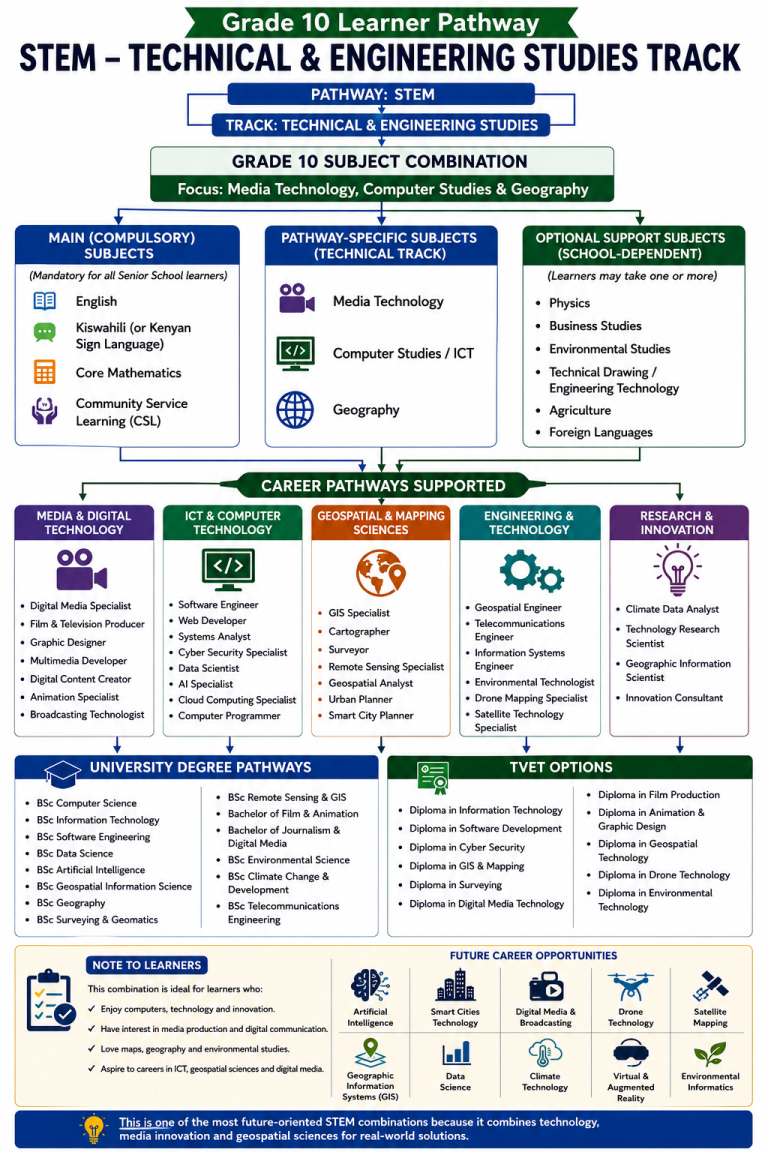
Grade 10 Learner Pathway STEM – TECHNICAL AND ENGINEERING STUDIES TRACK