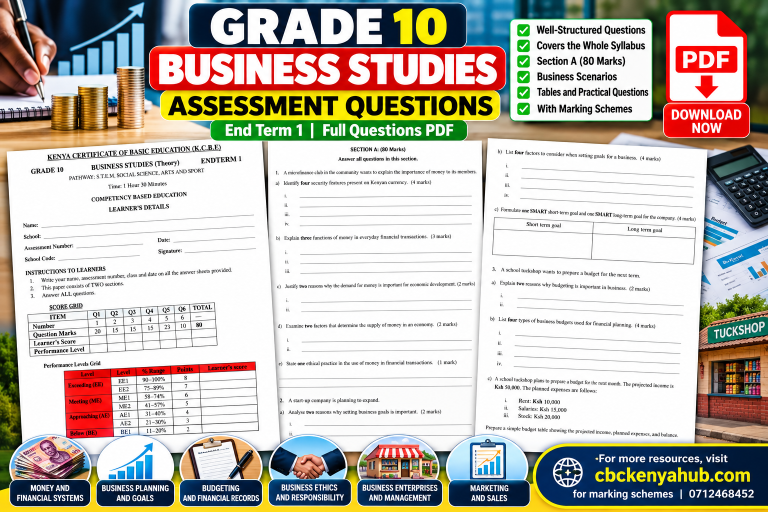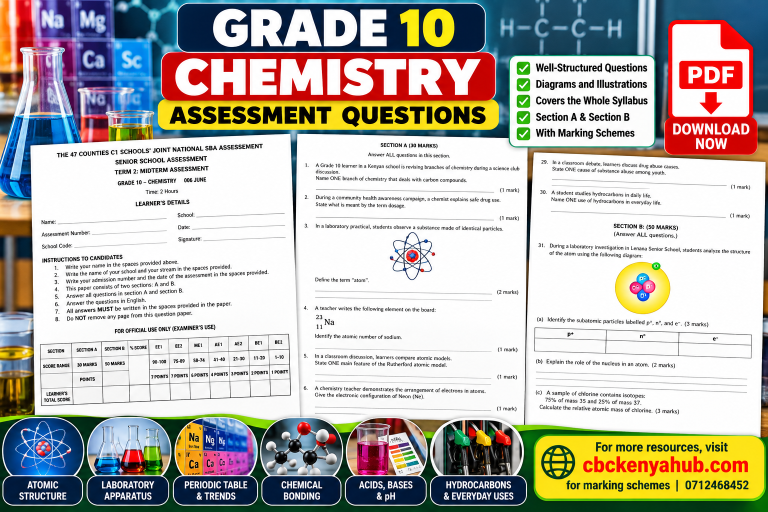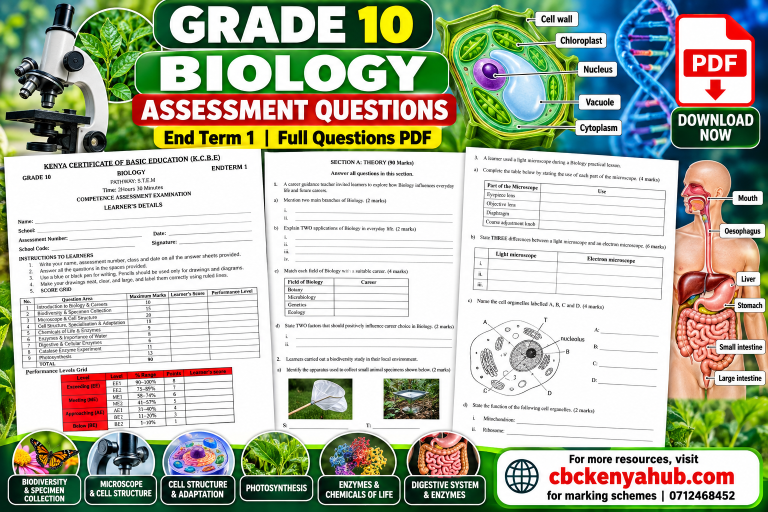
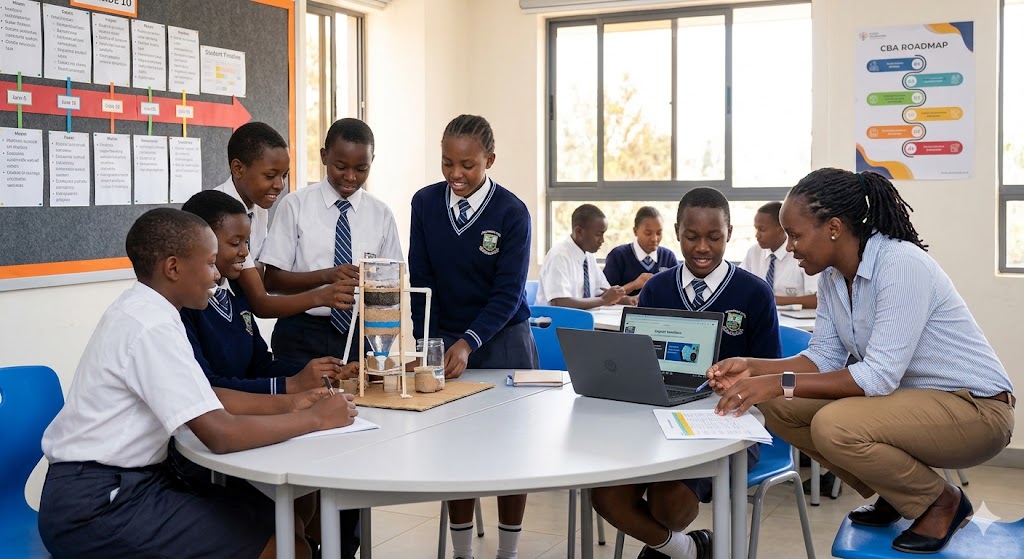
The official transition into Senior School (Grades 10, 11, and 12) marks the ultimate realization of Kenya’s Competency-Based Curriculum (CBC). For educators, this means the era of the high-stakes, single-event national exam is ending. In its place is Competency-Based Assessment (CBA), a sophisticated model designed to measure not just what a student knows, but how they apply that knowledge to solve problems.
For Grade 10 teachers in Ruiru and across Kenya, mastering CBA is no longer optional; it is the cornerstone of effective instruction in Senior School.
What is Competency-Based Assessment (CBA)? A Deep Dive
CBA is defined as any system of instruction, assessment, grading, and academic reporting that is based on students demonstrating that they have learned the knowledge and skills they are expected to acquire as they progress through their education.
Unlike traditional systems, CBA doesn’t just ask for facts; it demands mastery before progression. It relies on a blend of assessments that are:
-
Formative: Occurring continually during learning, used by teachers to adapt instruction and by students to guide their efforts.
-
Summative: Occurring at the end of a learning unit, used to document milestones. In Senior School, these milestones build toward pathway specialization.
The CBA approach shifts the goal from scoring an ‘A’ on a test to proving proficiency in critical competencies, attitudes, and values.
The Core Principles of CBA: Application in Grade 10
To implement CBA effectively in Senior School, teachers must align their methodology with seven core principles. These are the engines driving student growth.
1. Learner-Centered
The assessment is designed for the student, acknowledging different learning paces and styles. In Grade 10, this means differentiating tasks so that a visually oriented learner might demonstrate proficiency in biology through an infographic, while a kinesthetic learner builds a model.
2. Evidence-Based
Decisions about student achievement are never arbitrary. They are supported by tangible proof collected over time. As students move into Grade 10 specialization pathways (e.g., Arts, STEM, Social Sciences), this evidence must reflect those specific skills.
3. Criterion-Referenced
Learners are assessed against clear, predetermined standards (performance criteria), not compared to one another. “Mastery” is reaching the standard, making collaboration more vital than competition.
4. Authentic Tasks
This principle is critical in Senior School. Assessment tasks must mirror real-life complexity.
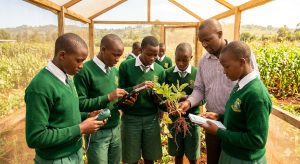
In the Agriculture pathway in Kiambu, students are not just taking a written exam on crop disease. Instead, in an authentic task, they are in the greenhouse, diagnosing a physical plant using digital tools and soil data. This proves they can function as agricultural scientists.
5. Feedback-Driven
CBA thrives on continuous dialogue. Feedback is not a score; it is a description of where the learner is on the proficiency rubric and how to take the next step. It is timely, constructive, and forward-looking.
6. Inclusive
CBA ensures fairness by accommodating diverse talents and learning needs. In Senior School, this means modifying the format—not the standard—to provide multiple pathways for success. If a student is non-verbal, a project-based evidence source might be more inclusive than an oral presentation.
7. Continuous
Assessment is seamless. Every activity, project presentation, laboratory investigation, and community service project provides data points. This accumulated data (e.g., in a student’s digital portfolio) provides a panoramic view of their capabilities, unlike a single snapshot exam.
Moving Beyond Tests: New CBA Tools for Grade 10
To adhere to these principles, teachers must expand their assessment toolkit. Grade 10 CBA relies heavily on the following:
| Assessment Tool | Practical Grade 10 Example | Why it works for CBA |
| Portfolios (Digital/Physical) | A collection of design drafts, final models, and critique notes for an Arts & Sports student. | Tracks growth and provides longitudinal evidence. |
| Projects/Performance Tasks | Designing and building a prototype of a local environmental solution in the STEM pathway. | Promotes authentic application of multiple competencies. |
| Oral Presentations & Debates | Debating a complex historical event or social issue in the Social Sciences pathway. | Assesses communication, critical thinking, and citizenship. |
| Practical & Lab Work | Conducting a chemical analysis of local water quality or engineering a simple circuit. | Evaluates technical skills and scientific inquiry. |
| Peer & Self-Assessment | Students using a shared rubric to evaluate each other’s collaborative skills during teamwork. | Develops metacognition and responsibility. |
💡 Senior School Teacher’s Note
The most vital cognitive shift required by CBA is changing your primary role from grader to facilitator and feedback loops manager. Your success is no longer defined by your class mean score, but by how accurately your collected evidence and feedback reflect and support each learner’s progression towards mastery. Rubrics must be shared before the assessment, turning them into a shared roadmap for success.
About the Author