

For decades, education in Kenya was largely defined by examinations. Learners spent years preparing for tests that would ultimately determine their academic progression and future opportunities. Success was measured by grades, rankings, and performance in national examinations.
Today, a different approach is taking shape. Competency-Based Education (CBE) is transforming learning by shifting the focus from what learners can memorize to what they can actually do with the knowledge they acquire.
The goal is simple but powerful: to produce learners who are not only knowledgeable but also skilled, creative, confident, and capable of solving real-world problems.
What Is Competency-Based Education?
Competency-Based Education (CBE) is an approach that focuses on developing specific competencies—combinations of knowledge, skills, values, and attitudes that enable learners to perform tasks successfully in different situations.
Instead of concentrating solely on examination scores, CBE seeks to ensure that learners can apply what they learn in practical and meaningful ways.
Learning Under CBE
      KNOWLEDGE
           │
           ▼
        SKILLS
           │
           ▼
       PRACTICE
           │
           ▼
      COMPETENCY
           │
           ▼
 REAL-LIFE APPLICATION
In other words, learning is no longer about remembering facts alone. It is about using knowledge effectively.
Moving from Memorization to Application

Traditional education often emphasized answering examination questions correctly. CBE emphasizes applying knowledge to solve problems and create solutions.
For example:
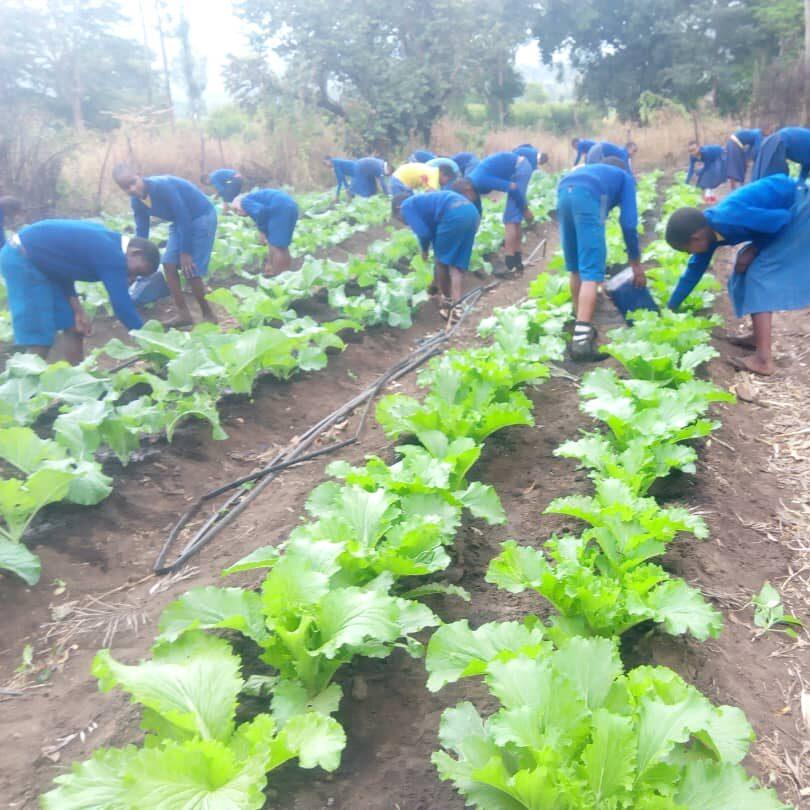
- Learners study environmental conservation and participate in tree-planting activities.
- They learn technology by creating digital presentations and using online tools.
- They study entrepreneurship through practical projects and innovation activities.
- They develop communication skills through teamwork and presentations.
Learning becomes active rather than passive.
The Core Competencies of CBE
At the heart of Competency-Based Education are key competencies that every learner is expected to develop.
1. Communication and Collaboration
Learners develop the ability to express themselves clearly and work effectively with others.
2. Critical Thinking and Problem Solving
Students learn how to analyze situations, identify challenges, and find solutions.
3. Creativity and Imagination
Innovation and original thinking are encouraged.
4. Citizenship
Learners develop responsibility, integrity, and respect for diversity.
5. Digital Literacy
Technology becomes an important tool for learning and communication.
6. Learning to Learn
Students develop curiosity and the ability to continue learning throughout life.
7. Self-Efficacy
Learners build confidence in their abilities and decision-making skills.
The CBE Competency Wheel
                   LEARNER
                       │

       ┌───────────────┼───────────────┐

       ▼               ▼               ▼

 Communication   Creativity    Digital Literacy

       ▼               ▼               ▼

 Citizenship   Problem Solving   Self-Efficacy

                       ▼

                Learning to Learn
Why CBE Matters in the Modern World


The world is changing rapidly.
Employers and universities increasingly value skills such as:
- Creativity
- Innovation
- Adaptability
- Collaboration
- Communication
- Critical thinking
- Digital competence
Many careers that today’s learners will pursue may not even exist yet. As a result, education must prepare learners not only to pass examinations but also to adapt and thrive in changing environments.
CBE seeks to equip learners with exactly these abilities.
Benefits of Competency-Based Education
Learners Discover Their Talents Early
Not every learner excels in traditional examinations.
Some may demonstrate exceptional abilities in:
- Sports
- Performing arts
- Technology
- Leadership
- Design
- Entrepreneurship
CBE provides opportunities for these talents to be identified and nurtured.
Reduced Examination Pressure
Instead of relying entirely on one examination, learner progress is assessed continuously.
This reduces anxiety and allows learners to demonstrate growth over time.
Practical Learning Experiences
Students engage in activities that connect classroom learning to everyday life.
Learning becomes meaningful, engaging, and memorable.
Better Preparation for Employment
Modern workplaces increasingly require employees who can work in teams, communicate effectively, solve problems, and use technology confidently.
These are the competencies that CBE seeks to develop.
Challenges Facing CBE


While CBE offers many advantages, implementation also presents challenges.
Resource Requirements
Schools need adequate learning materials, technology, laboratories, and practical equipment to effectively support competency development.
Teacher Training
Teachers must continually update their skills and teaching approaches to align with competency-based learning.
Increased Parental Involvement
Parents often play a more active role in supporting projects and learning activities outside the classroom.
Equity Concerns
Some schools may have greater access to resources than others, creating differences in learning opportunities.
The Future of Education in Kenya
The future belongs to individuals who can think critically, adapt quickly, communicate effectively, and solve complex problems.
Competency-Based Education is designed to nurture these qualities by ensuring that learning extends beyond textbooks and examinations.
The CBE Vision
        EDUCATION
             │
             ▼
        KNOWLEDGE
             │
             ▼
          SKILLS
             │
             ▼
       COMPETENCIES
             │
             ▼
        INNOVATION
             │
             ▼
        PRODUCTIVITY
             │
             ▼
      NATIONAL DEVELOPMENT
Final Thoughts


Competency-Based Education represents more than a change in teaching methods—it represents a new vision for education.
Rather than asking, “How much can a learner remember?”, CBE asks, “What can a learner do with what they know?”
By emphasizing practical skills, creativity, critical thinking, and lifelong learning, CBE aims to prepare learners for a future that demands much more than examination success.
The ultimate goal is to develop confident, capable, and responsible citizens who can contribute meaningfully to their communities and the nation as a whole.
About the Author

Related posts:
How to Apply for TSC Promotion Vacancies 2026 Quickly
KNEC Opens Digital Learning Portal.

CO-CURRICULAR ACTIVITIES IN SENIOR AND VOCATIONAL SCHOOL AND NON-FORMAL PROGRAMMES
Why More Than Half of Kenya's First Senior School Learners Chose STEM and What It Means for the Futu...