
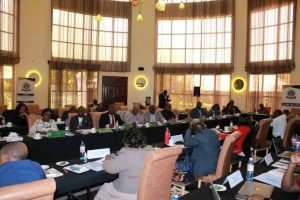
Kenya’s education sector is stepping into a highly structured new era. At the National Conference on Education held at Lake Naivasha Resort, the Ministry of Education rolled out sweeping administrative and structural reforms designed to stabilize the implementation of the Competency-Based Curriculum (CBC) and Competency-Based Education (CBE).
For the last few years, Junior Secondary School (JSS) has been caught in an awkward transitional space—physically housed in primary schools but floating in an administrative gray area. The new resolutions change all of that by introducing a single, unified system: the Comprehensive School.
Here is a deep dive into the major proposals from the Naivasha Education Conference and what they mean for parents, teachers, and learners.
1. The Birth of the Comprehensive School System
The most significant operational shift is the full administrative integration of Primary and Junior Schools into one comprehensive campus.
Previously, there was intense debate over whether JSS should have its own fully independent management, which threatened to create massive resource duplication. The Ministry has resolved this with a balanced leadership formula:
-
One Institutional Head: Every comprehensive school will operate under a single, overarching Head of Institution (HoI) and a single unified Board of Management (BoM).
-
The Dual-Deputy Model: To ensure that the distinct developmental needs of younger children and adolescents are met, the school will have two Deputy Headteachers—one dedicated to the Primary section and the other managing the Junior School section.
-
A New Directorate: These institutions will no longer answer to fragmented departments. Instead, they will be supervised by a newly proposed Directorate of Comprehensive School Education.
This structure aims to eliminate friction over shared resources like fields, laboratories, and staff, streamlining day-to-day operations.
2. Standardized Uniforms and Regulated Pricing
School uniforms have long been a financial headache for Kenyan parents. It has been common practice for schools to change uniform specifications abruptly or force parents to buy overpriced attire from exclusive commercial suppliers.
The Naivasha conference took a consumer-protection approach to tackle this issue:
-
A National Design Template: The Ministry is introducing a standardized common uniform design across all Basic Education levels countrywide.
-
Regulated Capping: Uniform prices will be strictly regulated and capped by the government, giving parents the freedom to source standard materials and use affordable local tailors.
-
Preserving Local Heritage: To ensure individual schools do not lose their distinct identities, institutions will maintain their unique traditions through customized school badges
3. Financial Streamlining and Capitation
To complement the structural integration, school financing is getting a major transparency upgrade.
The government will harmonize school fees and government capitation structures within these comprehensive schools into a singular, unified framework. This is a deliberate move to block rogue institutional heads from introducing hidden levies or manipulating separate bank accounts under the guise of JSS upkeep.
Furthermore, all national bursaries and scholarships will be consolidated into a centralized framework managed via the Kenya Education Management Information System (KEMIS). This digital tracking system will ensure funds go directly to vulnerable students while preventing “double-dipping,” where well-connected families claim multiple bursaries at the expense of others.
4. Wins for Educators: The End of “Internships” and “Delocalization”
The conference also delivered substantial policy shifts regarding teacher welfare and human resource management, addressing long-standing friction between the Teachers Service Commission (TSC) and teachers’ unions.
From Interns to Contractual Certainty
The controversial teacher internship model is being retired. Moving forward, teachers serving under the internship framework will be officially redesignated as “teachers on contract.” Under this new agreement, they will be automatically absorbed into permanent and pensionable terms upon the successful completion of their two-year contracts.
“Nationalization” Replaces Delocalization
The dreaded teacher “delocalization” policy—which often saw teachers forcibly transferred to far-flung counties away from their families—is being officially rebranded and reframed as “nationalization.” The Ministry insists that the new approach will focus heavily on the equitable, data-driven distribution of specialized talent across counties, rather than punitive or forced relocations.
What Lies Ahead?
These resolutions represent the government’s attempt to transition CBC from an ambitious experimental phase into a mature, cost-effective, and permanent reality. By cutting down administrative overhead, protecting parents from commercial exploitation, and stabilizing teacher employment contracts, the Ministry of Education is laying a concrete foundation for the future of basic education in Kenya.
To watch the opening speeches and fully examine the policy debates from the ground at Lake Naivasha Resort, you can view the President William Ruto National Education Conference Address. This video features the official opening ceremony from the summit where these sweeping reforms were first put into motion.
About the Author

Related posts:

A Step-by-Step Guide to KEMIS Onboarding for All Roles

Best Embu County Senior Schools { C1 National, C2 Extra-County, C3 County and C4 Sub-County

How Senior School Simulators Are Redefining Kenya's Competency-Based Education (CBE)

BREAKING NEWS: TSC Closes May 2026 Payroll as New “White Smoke Detectors” Set to Be Installed in Sch...