
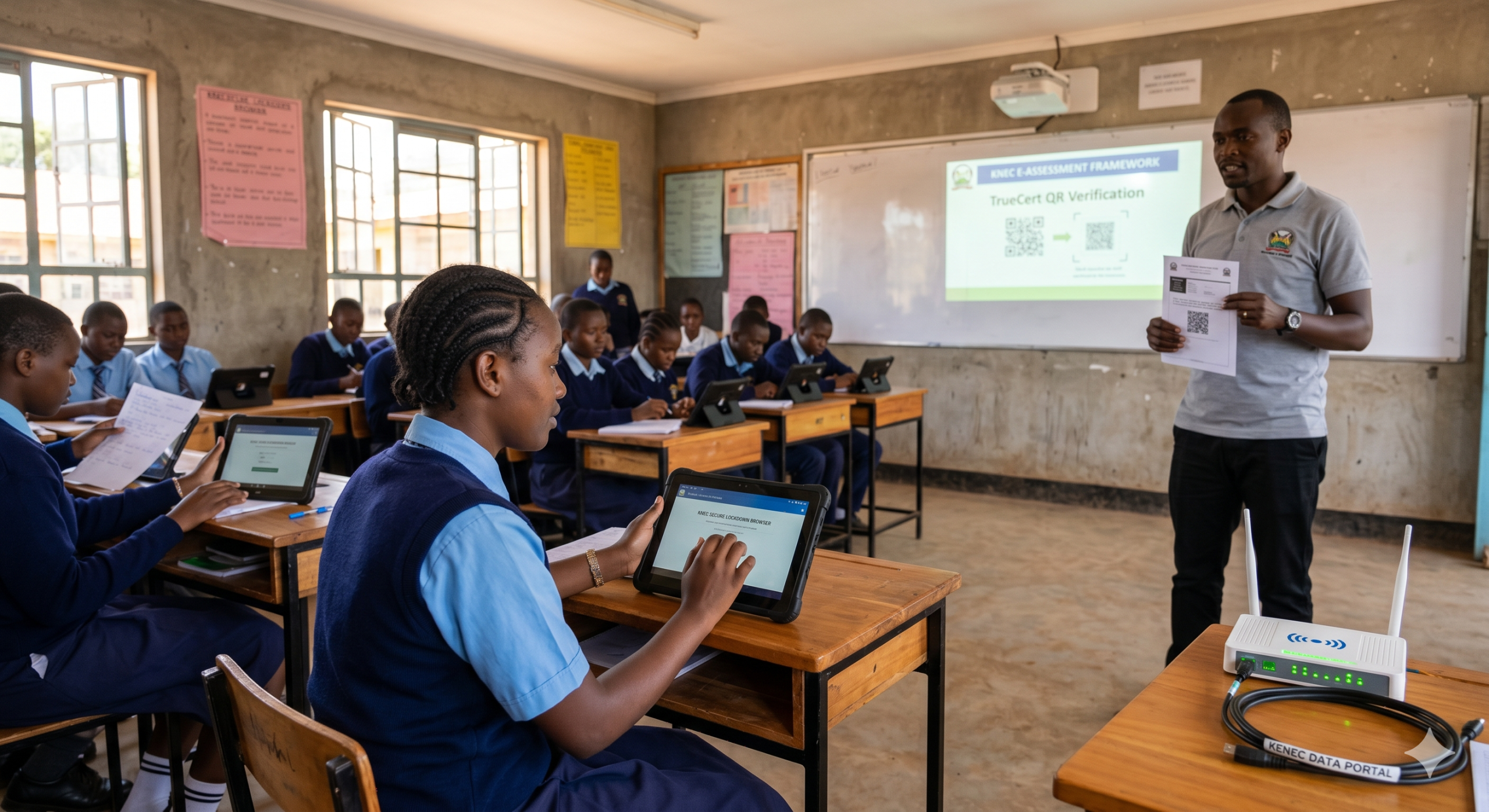
Screen Time vs. Exam Time
The chalkboard is slowly fading into the background. If you’ve stepped into a Kenyan school staffroom lately, the conversation has shifted drastically from counting revision booklets to checking Wi-Fi bars and portal access.
The Kenya National Examinations Council (KNEC) is actively executing its digital assessment rollout timeline, fundamentally altering how we measure learning. Under the Competency-Based Assessment Framework for Senior School (CBAF-SS), the landscape is moving away from purely high-stakes, pen-and-paper examinations toward school-based, digitized formative assessments.
With Grade 10 Senior School Assessment Centres registering online, the digital shift is no longer a futuristic pilot—it is our current reality. But as the system log-ins go live, nationwide debates are sparking: Are our schools truly e-ready, or are we plugging a high-tech system into an overloaded grid?
The Digital Blueprint: How It Works
The pivot to digital isn’t just about downloading PDF versions of exams (though that is a common fallback). KNEC’s long-term framework outlines an integrated ecosystem of e-Assessments and e-Marking designed to reduce printing costs, speed up verification, and track a learner’s development continuously.
Here is how the continuous assessment pieces fit together under the new framework:
| Assessment Stage | Contribution to Final Score | Platform / Delivery Method |
| Grade 10 School-Based Assessments (SBA) | 15% | Accessed via KNEC Senior School Portal; practicals recorded and uploaded. |
| Grade 11 School-Based Assessments (SBA) | 15% | Digital tasks, projects, and school-level theory uploads. |
| Grade 12 Summative Assessment | 70% | National summative evaluation managed via secure platforms. |
Crucial Security Update: To protect data integrity and curb academic fraud, KNEC has legally mandated the use of approved secure lockdown browsers for e-assessments. Furthermore, for post-school verification, they have introduced TrueCert—a cryptographic, QR-code-based mobile verification platform designed to eliminate fake academic certificates instantly.
The Reality of “E-Readiness”: A Tale of Two Classrooms
While the policy sounds seamless on paper, execution on the ground reveals vast disparities in school readiness. The shift has exposed a stark divide between well-funded urban academies and resource-constrained public schools.
1. The Infrastructure Deficit
To sit a digital exam, you need power, a device, and a stable internet connection. While the government distributed tablets years ago under the Digital Learning Programme (DLP), many schools struggle with broken hardware, missing accessories, or entirely disconnected computer labs. KNEC guidelines state that in schools where digital devices are inadequate, “assessments can be done in shifts”—but managing shifts for hundreds of learners creates massive administrative bottlenecks for teachers.
2. System Vulneracies & Portal Traffic
Anyone who has tried to check national results the hour they drop knows that high web traffic can paralyze Kenyan servers. With school heads required to upload continuous formative scores dynamically to the Kenya Education Management Information System (KEMIS) and the KNEC CBA portal, portal downtime and local connectivity blackouts remain a massive anxiety point for teachers.
3. The Equity Dilemma
Can an assessment be fair if the testing environments are completely unequal? A student in a national school using high-speed fiber internet and a personal laptop experiences a digital exam very differently than a student in a rural day school sharing a lagging mobile hotspot on a single school tablet. If digital literacy itself varies wildly across counties, we risk testing a child’s tech-savviness rather than their actual subject competency.
Moving Forward: Bridging the Digital Divide
KNEC’s transition to digitized assessments is a commendable leap toward global educational standards. It promises greater transparency, modern data tracking, and an end to the “rot-and-repeat” culture of old examinations.
However, e-readiness cannot be willed into existence by policy alone. For this rollout to be genuinely equitable, the Ministry of Education and regional stakeholders must aggressively invest in stabilizing rural school power grids, expanding school ICT infrastructure, and conducting continuous capacity building for teachers via the online CBA self-paced training portals (cbalms.knec.ac.ke).
The digital highway is paved, but we must make sure all our schools have the vehicles to drive on it.
About the Author

Related posts:

BREAKING NEWS: Fatal Fire at Utumishi Girls Academy in Gilgil Claims Multiple Young Lives

How AI is Transforming Competency-Based Education

Best Bungoma County Senior Schools { C1 National, C2 Extra-County, C3 County and C4 Sub-County

How Senior School Simulators Are Redefining Kenya's Competency-Based Education (CBE)