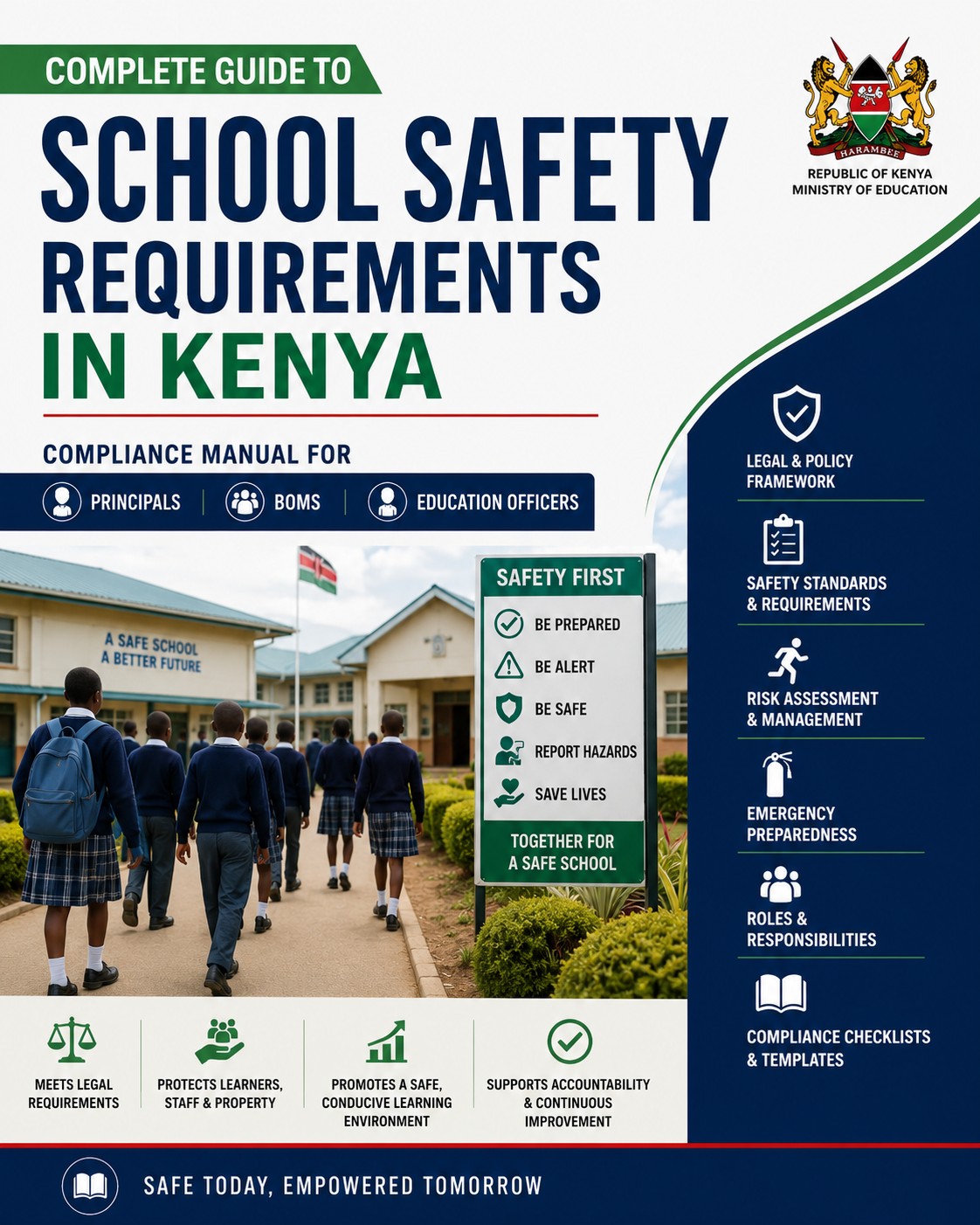
The regulatory framework governing institutional safety in Kenyan schools is definitive, legally binding, and leaves no room for error. Anchored by the Basic Safety Standards Manual for Schools in Kenya (2008) and its vital 2015 update from the Ministry of Education, these guidelines demand absolute compliance from every public and private institution.
Yet, a profound gap often exists between the manual’s strict legal mandates and the day-to-day realities inside our classrooms and dormitories.
This guide serves as a practical implementation resource for Sub-County Directors of Education, Public Health Officers (PHOs), Board of Management (BOM) members, and School Principals to systematically audit, enforce, and maintain official school safety standards.
1. Physical Infrastructure & Building Safety Standards
Over-enrollment driven by national education policies has put immense pressure on school infrastructure. However, structural safety can never be compromised. The Ministry of Education safety manual stipulates precise spatial and structural dimensions:
-
Classroom Capacity: A strict minimum of 1.5 square meters ($1.5\text{ m}^2$) of space per pupil must be maintained to prevent overcrowding.
-
Doors and Windows: All classroom and dormitory doors must open outwards easily. Windows must never have permanent steel grills or bars, ensuring an unobstructed escape route during emergencies.
-
Ventilation: Buildings must feature cross-ventilation with adequate air circulation.
-
Staircases & Floors: Staircases must be equipped with secure handrails on both sides, non-slip treads, and vertical baluster gaps no wider than 10cm. Floors must be smooth, non-slip, and free of sharp edges, with ramps provided for any raised platforms to ensure accessibility.
-
Ceilings: All classrooms and administrative blocks must have completely sealed ceilings to prevent the accumulation of hazardous dust and infestation by wild animals or vermin.
-
Perimeter Security: Every school must be secured by a boundary wall or perimeter fence measuring at least 2.1 meters high with controlled access gates to monitor entries and exits.
2. Fire Safety Regulations & Dormitory Compliance
Fire safety remains the most heavily inspected aspect of school compliance in Kenya. Following past institutional fire tragedies, enforcement agencies maintain a zero-tolerance policy on structural violations in boarding schools.
                  [OFFICIAL DORMITORY EMERGENCY SPACING]

        ┌────────────────────────────────────────────────────────┐
        │                        BUNK BED                        │
        └────────────────────────────────────────────────────────┘
        ◄──────────────────────── 1.2m ──────────────────────────►  (Min. space between beds)
        ┌────────────────────────────────────────────────────────┐
        │                        BUNK BED                        │
        └────────────────────────────────────────────────────────┘
  ========================================================================
    ◄─────────────────────────── 2.0m ──────────────────────────────────►
                            MAIN ESCAPE AISLE
  ========================================================================
Critical Dormitory Safety Rules:
-
The Open Flame Ban: Open flames, including candles, matchboxes, and mosquito coils, are strictly banned in all boarding schools.
-
Aisle and Bed Spacing: Bunk beds must maintain a minimum lateral spacing of 1.2 meters, with central evacuation pathways and main aisles kept entirely clear at a minimum width of 2 meters.
-
Dormitory Dimensions & Access: Main doors must be at least 5 feet wide, opening outwards. Dormitories must never be locked from the outside when students are inside.
-
Fire Extinguishers: A minimum of two (2) fire extinguishers per floor must be installed at clearly visible, accessible points. These units must be professionally serviced and tagged annually.
-
Evacuation Drills: Comprehensive fire evacuation drills must be conducted at least once every term. Every drill must be officially recorded in a safety logbook, detailing response times and headcount tallies.
-
Fire Assembly Point: A wide, open, and clearly marked space must be designated on the school grounds as the official emergency assembly area.
3. Water, Sanitation, and Hygiene (WASH) Standards
Public Health Officers are legally mandated to enforce specific health and sanitation ratios within educational institutions to prevent disease outbreaks.
| Target Group | Official Sanitation Ratio | Required Amenities |
| Boys | 1 Toilet + 1 Urinal per 30 Students | Functional privacy doors, proper ventilation, separate staff facilities, clean running water, and handwashing soap. |
| Girls | 1 Toilet per 25 Students | Functional privacy doors, proper ventilation, separate staff facilities, clean running water, and handwashing soap. |
Essential Water and Hygiene Mandates:
-
Handwashing Stations: Fixed handwashing stations with functional running water and soap must be positioned directly outside all latrines and immediately adjacent to the dining hall or kitchen areas.
-
Safe Drinking Water: Schools must provide constant access to clean, safe drinking water. If the primary source is an unpiped system or borehole, the institution must maintain a transparent, documented water chemical treatment or chlorination log.
4. Institutional Health, Safety, and First Aid
Every school must maintain an active emergency medical response system to handle student illnesses or injuries safely:
-
The School Sick Bay: Institutions must set up a dedicated first aid room containing at least one examination bed, screened off entirely to ensure student privacy.
-
First Aid Infrastructure: Fully stocked, unexpired first aid kits must be kept in highly accessible locations, and at least one resident staff member must hold a certified, up-to-date credential in first aid administration.
-
Medication Controls: Student self-medication is strictly prohibited. All prescription and emergency drugs must be locked securely within the administration or sick bay cabinets and dispensed only by authorized personnel.
5. Security Protocols and Visitor Controls
Maintaining physical security is a vital pillar of the MoE safety manual, particularly for boarding institutions:
-
Active Guard Personnel: Competent, vetted security guards must be stationed at the main gates and perform regular patrols around the perimeter, especially during night hours.
-
The Visitor Register: A mandatory, centralized visitor logbook must be maintained at the main gate. All external visitors must record their full identity details, purpose of visit, and exact times of entry and exit.
-
Student Identification: Secondary schools must issue official student identification cards to regulate movement and prevent unauthorized entry into school compounds.
6. Disaster Preparedness and Emergency Planning
True safety compliance requires an active organizational structure capable of responding to sudden environmental or structural crises:
-
Disaster Management Committee: Every school must form a functional safety committee comprising administrators, teachers, non-teaching staff, and student leaders to run routine safety audits.
-
Emergency Contacts: Local emergency phone numbers—including sub-county education offices, nearby hospitals, police stations, and fire services—must be prominently displayed on the staffroom notice board.
-
Evacuation Plan Diagrams: Clearly illustrated emergency evacuation routes and exit maps must be framed and permanently posted on classroom and dormitory walls.
-
Lightning Arrestors: Buildings situated in regions prone to severe weather and thunderstorms must be fitted with functional, certified lightning arrestors.
7. Kitchen Operations and Food Safety
Foodborne illnesses can destabilize an entire school. Public Health Officers closely inspect kitchen zones using these metrics:
-
Structural Separation: The kitchen must be built as a separate structure away from the core classroom blocks, boasting excellent ventilation and dedicated fire suppression tools.
-
Medical Certification: Every single cook, stoker, and food handler employed by the school must possess a valid, updated Public Health Medical Certificate ($Medical\text{ Form }15$).
-
Storage Regulations: Food storage dry rooms must be completely vermin-proof and kept well-ventilated. All food sacks, grains, and perishables must be stacked neatly on elevated wooden pallets—never directly on concrete floors—to prevent moisture ingress and mold.
8. Child Protection and Positive Discipline Frameworks
Physical safety must be paired with psychological safety. The manual integrates child protection directly into daily school management:
-
Child Protection Policy: Every institution must adopt a localized, written Child Protection Policy signed by the BOM, detailing protocols for handling student welfare and reporting abuse.
-
The Corporal Punishment Ban: Corporal punishment remains strictly illegal in Kenyan schools under the Basic Education Act. School administrations must completely replace punitive physical measures with verified positive discipline strategies.
-
Guidance & Counseling Department: A dedicated, fully functional Guidance and Counseling office must exist within the school. This department must be equipped with private spaces to offer psychological support, address student grievances early, and serve as an active early warning system against institutional unrest.
Joint Action Plan for Sub-County Stakeholders
Achieving 100% compliance requires regular collaboration rather than punitive enforcement:
-
Principals and BOMs: Safety compliance must be factored into the annual school budget. Prioritize repairing broken fire extinguishers, clearing blocked dormitory exits, and securing proper food pallets over cosmetic or decorative school upgrades.
-
Sub-County Directors: Transition from a purely reactive stance to an advisory, auditing role. Work alongside school heads to identify infrastructural gaps early, helping them leverage CDF or Ministry emergency funds to fix over-congestion hazards.
-
Public Health Officers: Maintain a strict, objective, and regular inspection schedule. Early evaluation and firm enforcement of sanitation, water treatment, and food handling protocols prevent institutional crises before they occur.
About the Author

Related posts:
A Deep dive into the 2026 Knec projects grade 3 to Grade 8

TSC Launches Nationwide ICT Training for All JSS Teachers (June 2026)

How to Apply for TSC Promotion Vacancies 2026 Online: Step-by-Step Guide
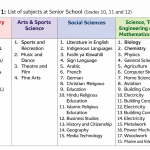
List of Senior School Subjects & Subject Combinations (Grades 10, 11 & 12 – CBC Kenya)